





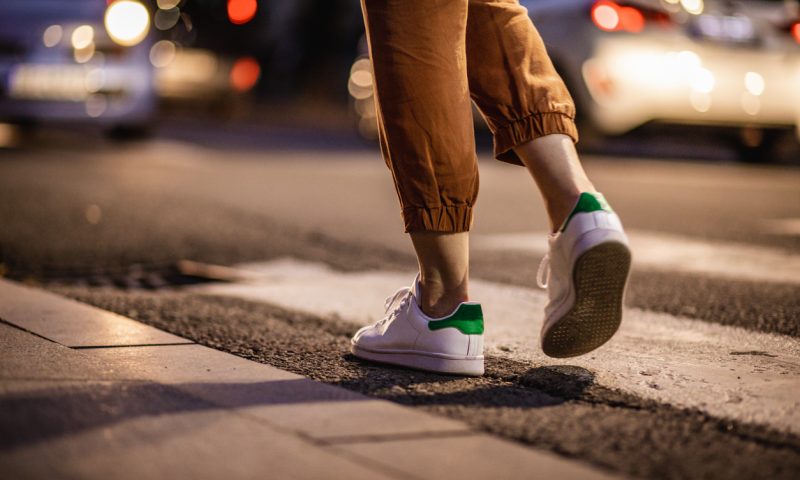
Late classes, the library, a shift, a friend’s place — a lot of student life happens after dark. And after dark is when walking gets riskiest. Most serious pedestrian crashes in Florida happen at night, when drivers simply don’t see people in time. If you’re walking between campus and housing in Boca Raton, West Palm Beach, Palm Beach Gardens, or Fort Pierce, these habits are worth building now.
Why night raises the stakes
Headlights light up far less of the road than people assume, and a person in dark clothing can be nearly invisible until a driver is dangerously close. Add tired or distracted drivers, fewer witnesses, and long stretches between crossings, and the margin for error shrinks. This isn’t about fear — it’s about giving drivers every chance to see you.
Be impossible to miss
– Wear light or bright clothing; add reflective material or a small clip-on light to your bag.
– Carry your phone’s flashlight on, pointed down, when crossing.
– Cross only at lit, marked crossings — never assume a driver sees you mid-block.
– Make eye contact with drivers before stepping out.
Plan the route, not just the destination
– Choose lit, populated streets even if they’re slightly longer.
– Map your nighttime walk in advance and share your location with a friend.
– Know where campus blue-light phones and safe buildings are along the way.
– Many campuses offer night shuttles or safety escorts — use them; that’s what they’re for.
Travel together when you can
There’s safety in numbers, and a walking buddy is also a witness if something goes wrong. For longer or unfamiliar routes after a late event, a rideshare may be the smarter call.
If a car hits you at night
1. Get to safety and call 911; get medical care even if you feel fine.
2. Get a police report and the driver’s information.
3. Photograph the scene, lighting, and your injuries; collect witness contacts.
4. Don’t give a recorded statement to the driver’s insurer before you understand your rights.
Nighttime cases often turn into disputes about whether the pedestrian was visible. Because Florida applies a modified comparative negligence rule (HB 837), insurers may argue you were hard to see to reduce what they pay. Evidence is your protection — and where a monitored intersection is involved, our Warrior Vision approach helps us preserve traffic-camera footage before it’s gone.
You’re not alone after a crash
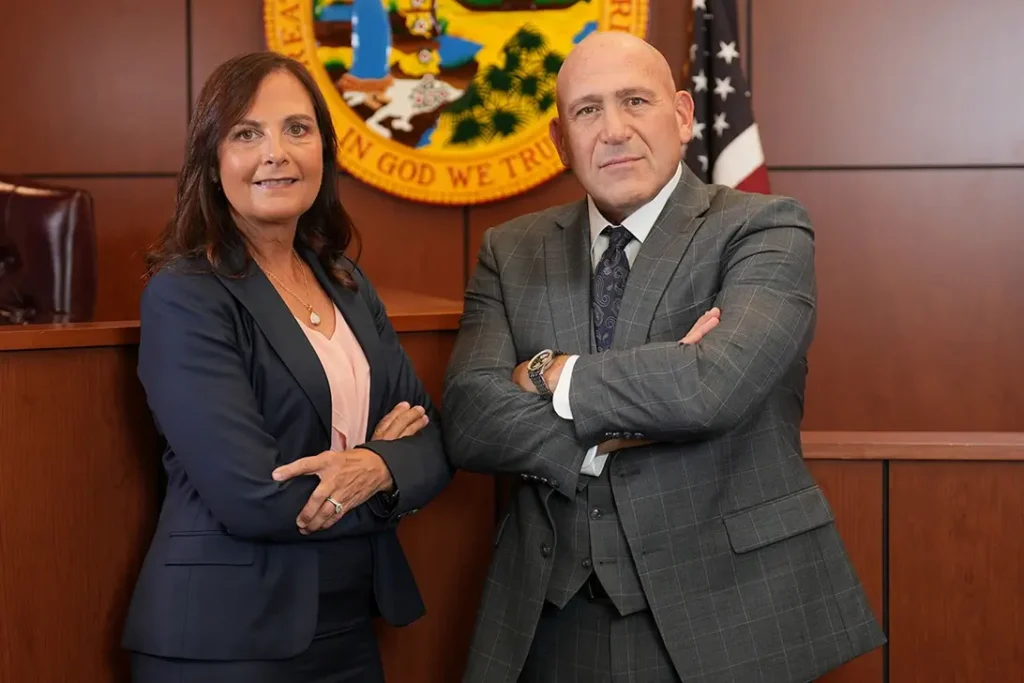
LaBovick Law Group has fought for injured Floridians for more than 35 years, treating every client like family. If a driver’s carelessness hurt you, we’ll fight relentlessly for what’s fair. Past results don’t guarantee similar outcomes.
Call now for a FREE consultation — No Fee Guarantee.

