



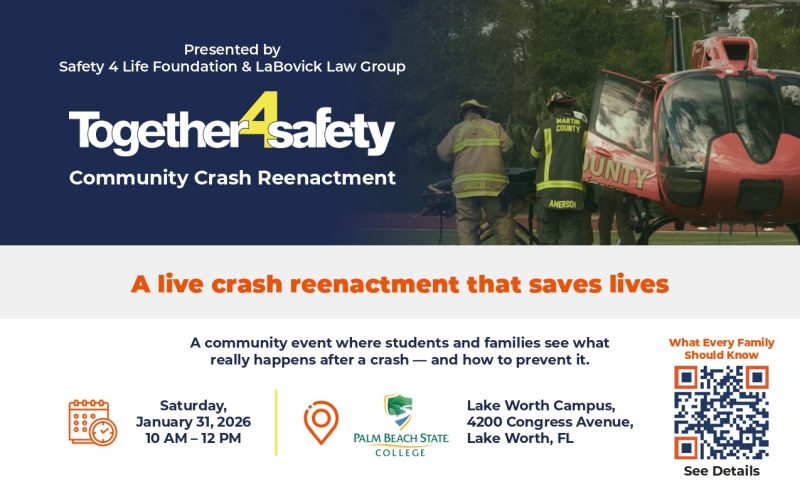



You walk every day, but how much do you actually know about what Florida law expects of you — and of the drivers around you? Understanding the rules helps you stay safe and protects you if a driver’s carelessness ever lands you in a dispute with an insurance company. Here’s the plain-language version for students across South Florida.
Pedestrians and the right of way
Florida law generally gives pedestrians the right of way in marked crosswalks and at many unmarked intersections (Fla. Stat. 316.130). Drivers must yield. But the same law expects pedestrians to use reasonable care — you can’t suddenly leave a curb into the path of a vehicle that’s too close to stop. The right of way protects you; it doesn’t make you invincible.
Crossing outside a crosswalk
When you cross outside a crosswalk (often called jaywalking), Florida law generally requires you to yield to vehicles. Mid-block crossings near campus — especially to reach a bus stop or a friend’s apartment — are a common factor in serious crashes. If a crossing isn’t at an intersection or marked crosswalk, treat every approaching car as if it can’t stop.
Sidewalks, signals, and where to walk
– Use sidewalks where they’re available.
– Where there’s no sidewalk, walk on the shoulder facing oncoming traffic.
– Obey pedestrian signals; don’t start across on a flashing “don’t walk.”
Headphones and distraction

Florida limits wearing headphones in both ears while operating a vehicle, and the safety logic applies to walking too: if you can’t hear traffic, you’ve removed one of your best warning systems. Keep one ear open near roads.
How fault works if you’re hit
This is the part students rarely think about until it matters. Florida follows a modified comparative negligence standard after the 2023 reforms (HB 837): your compensation can be reduced by your share of fault, and if you’re found more than 50% at fault, you may recover nothing. Insurers know this and often argue the pedestrian was careless to cut their payout. That’s why clear evidence — witness statements, photos, and where available, traffic-camera footage — is so important. Through our Warrior Vision approach, we move quickly to preserve that footage before it disappears.
Deadlines matter
If you’re injured by a negligent driver, Florida’s statute of limitations for most negligence claims is now two years. Waiting can cost you the right to recover entirely, so don’t sit on a serious injury.
Know your rights, protect yourself
Knowing the law is the first step; having someone in your corner is the second. LaBovick Law Group has fought for injured Floridians for more than 35 years, and we treat every client like family. If a driver’s carelessness hurt you, we’ll explain your options clearly and fight relentlessly for what’s fair. Past results don’t guarantee similar outcomes.
Call now for a FREE consultation — No Fee Guarantee.

