You are doing everything you can for the person you love. You researched facilities, asked the hard questions, toured the halls, and made what felt like the right choice. Now something feels wrong. Maybe it is a bruise you cannot explain, a sudden change in your parent’s mood, or a gut feeling you cannot shake after every visit. Whatever brought you here, we want you to know: your instincts matter, and you are not overreacting.
At LaBovick Law Group, our Boca Raton nursing home abuse lawyers fight for families exactly like yours. We know you are stretched thin, juggling your own household, your career, and the weight of caring for an aging parent. We will carry the legal burden so you can focus on being present for the people who need you.
Call Now for a FREE Consultation
What Nursing Home Abuse and Neglect Actually Looks Like
Abuse and neglect in nursing facilities are not always obvious. Facilities rarely admit wrongdoing, and residents who depend on the staff for daily care are often afraid, confused, or physically unable to speak up for themselves.
Under Florida Statutes Chapter 415, abuse is defined as any willful act or negligence that results in physical injury, mental anguish, or financial exploitation of a vulnerable adult. Florida law recognizes several distinct forms of mistreatment.
Physical Abuse
Physical abuse includes hitting, slapping, pushing, improper use of restraints, and any contact that causes bodily harm. Look for bruises, fractures, or unexplained injuries, especially if the facility’s explanation does not match what you are seeing.
Neglect
Neglect happens when a facility fails to provide the basic care a resident needs. Under Florida Statute 400.022, every nursing home resident has an enforceable right to receive adequate and appropriate medical, nursing, and rehabilitative services. When a facility cuts staffing to save money or simply fails to follow a resident’s care plan, that is a violation of the law, not just a lapse in judgment.
Common signs of neglect include:
- Unexplained or sudden weight loss and visible signs of malnutrition or dehydration
- Bedsores (pressure ulcers), especially at Stage 2 or beyond, which signal prolonged immobility without proper repositioning
- Poor hygiene, soiled clothing or bedding, and an unclean living environment
- Untreated infections or worsening medical conditions
- Frequent falls or injuries that are dismissed as “accidents”
- A resident wandering unsupervised, sometimes leaving the facility altogether (a dangerous situation known as elopement)
Emotional and Psychological Abuse
Verbal threats, humiliation, deliberate isolation, and intimidation all count as abuse under Florida law. Signs include your loved one becoming withdrawn, fearful, unusually anxious around certain staff members, or reluctant to speak freely when staff are present.
Financial Exploitation
Unauthorized use of a resident’s funds, identity theft, forgery, and coercing financial decisions are all forms of financial exploitation recognized under Florida Statute 415. If you notice missing money, unexplained charges, or changes to financial documents, take it seriously.
Sexual Abuse
Non-consensual sexual contact is a crime and a civil violation. Victims may show signs of physical trauma, unusual distress, or unexplained behavioral changes.
A concerned adult daughter sitting with her elderly mother in a care facility, speaking quietly and attentively. Alt text: “Sandwich-generation caregiver visiting an elderly parent in a Boca Raton nursing home.”
Why This Happens in Boca Raton’s Nursing Homes
Boca Raton is home to a large and growing senior population, and Palm Beach County has hundreds of licensed long-term care facilities. Many provide excellent care. But the pressure to cut costs, understaffing, and inadequate staff training create conditions where abuse and neglect become far too common.
A 2024 federal mandate from the Centers for Medicare and Medicaid Services (CMS) requires nursing homes to provide at least 3.48 hours of care per resident per day. When facilities fall short of that standard, residents pay the price with missed medications, skipped repositioning, delayed responses to falls, and inadequate supervision of residents with dementia or cognitive decline.
Many of the facilities responsible for the worst outcomes are owned by large corporate operators whose primary obligation is to shareholders, not residents. Holding those corporations accountable requires experienced legal advocacy and a team that knows how to cut through layers of ownership structures to reach the parties truly responsible.
That is what we do.
Florida Law Protects Your Loved One. We Enforce It.
Florida has some of the strongest elder protection laws in the country. Understanding what those laws say is a critical part of advocating for your parent.
Florida Statute 400.022, the Residents’ Bill of Rights, guarantees every nursing home resident the right to:
- Be treated with dignity, courtesy, and respect
- Receive adequate and appropriate medical, nursing, and rehabilitative care
- Be free from physical and mental abuse, punishment, involuntary seclusion, and inappropriate use of restraints
- Privacy in treatment and personal care
- Participate in their own care planning
- Voice grievances without fear of retaliation
Florida Statute 400.023 gives residents and their families the right to pursue civil action when those rights are violated. This means your family has a direct legal avenue to hold a nursing home accountable in court, separate from any administrative complaint.
Florida Statute 415 covers the broader definition of abuse, neglect, and exploitation of vulnerable adults, and creates additional reporting obligations for facilities and their staff.
The Time Limit to File Is Shorter Than Most Families Realize
Under Florida Statute 400.0236, the statute of limitations for nursing home abuse and neglect claims is generally two years from the date the incident occurred or was reasonably discovered. Florida’s 2023 tort reform (HB 837) reinforced this shorter window for general negligence claims, making it more important than ever to act quickly.
There is an additional procedural reality that families rarely expect: Florida law requires a presuit investigation process under Florida Statute 400.0233 before a lawsuit can be filed. That process involves gathering medical records, engaging expert reviewers, and giving formal notice to the facility, all of which takes time. If you wait until the two-year deadline is approaching, there may not be enough time to complete these steps.
Do not wait. The sooner you call, the more options your family has.
*Note: Statute of limitations deadlines and procedural requirements in Florida can be complex and depend on the specific facts of each case. This page reflects the law as of the date noted above and should be verified with an attorney. We recommend confirming current deadlines with our team directly.*
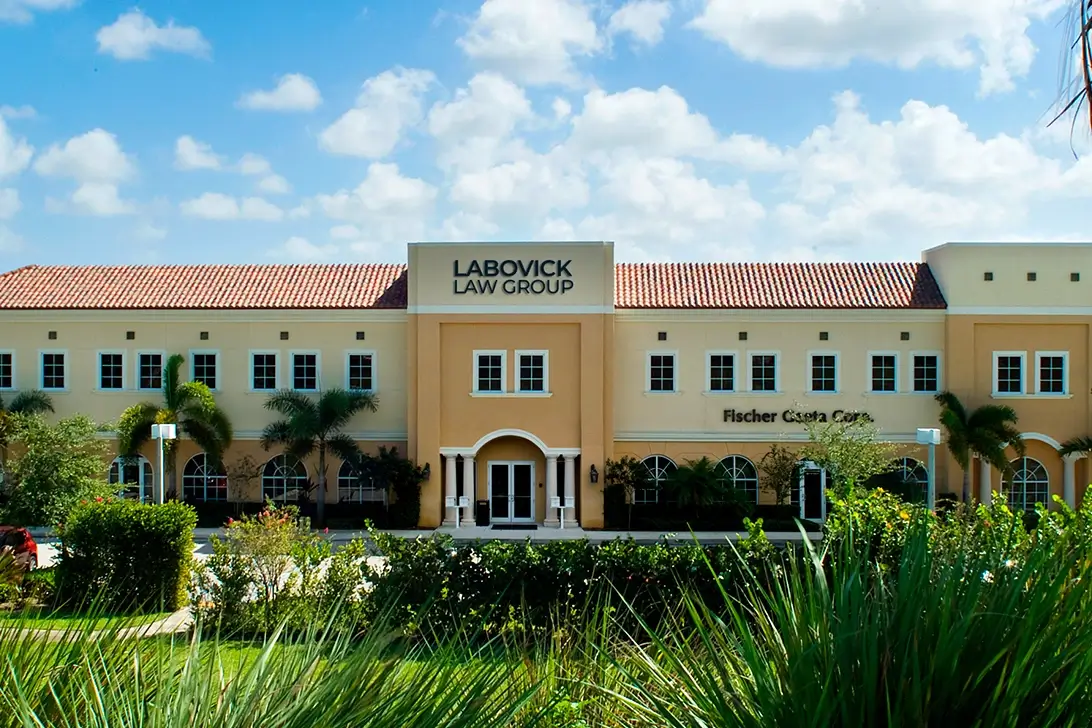
The exterior of a South Florida nursing home facility on a sunny day, representing the Boca Raton elder care environment. Alt text: “Nursing home facility in Boca Raton FL where LaBovick Law Group holds negligent operators accountable.”
What to Do Right Now If You Suspect Abuse or Neglect
If something feels wrong, trust that feeling. Here are concrete steps you can take today:
- Document everything. Write down every concern, date, and observation. Take photographs of visible injuries, unsanitary conditions, or anything that does not look right. Save all correspondence with the facility.
- Talk to your loved one privately. If your parent is able to communicate, speak with them alone, away from staff. Their account matters and may form a critical part of any legal action.
- Report to the facility in writing. Put your concerns in writing to the administrator. A verbal complaint is too easy to ignore or deny later.
- File a complaint with the Florida Agency for Health Care Administration (AHCA). AHCA licenses and inspects nursing homes and has the authority to investigate abuse complaints and cite facilities for violations.
- Contact the Florida Long-Term Care Ombudsman Program. This state program advocates specifically for nursing home residents and can investigate complaints on your loved one’s behalf.
- Report to the Florida Department of Children and Families (DCF), Adult Protective Services. DCF’s Adult Protective Services division responds to reports of elder abuse, neglect, and exploitation.
- Call LaBovick Law Group. Our Boca Raton nursing home abuse lawyers can begin a parallel investigation immediately, preserving evidence, reviewing facility records, and protecting your family’s rights before the facility has a chance to cover its tracks.
How LaBovick’s Warriors for Justice Fight for Your Family
Our team has spent more than 35 years fighting for the people of South Florida. We have helped resolve more than 9,000 cases and recovered more than $600 million for our clients. Those results reflect something real: a team that does not back down and does not settle for less than your family deserves.
Past results do not guarantee future outcomes. Every case is different. What we can promise is that your case will receive the same dedicated attention from the same legal team, start to finish. We are not a settlement mill. We dig into the evidence, we know the law, and we stand up to corporate defense teams who are paid to minimize what happened to your parent.
Here is what relentless advocacy looks like in a nursing home case:
- Immediate evidence preservation. Nursing home records can be altered or destroyed. We act fast to secure medical records, staffing logs, care plans, incident reports, and facility inspection records.
- Expert review. We work with medical and nursing care experts who can identify deviations from the accepted standard of care and translate those findings into clear, compelling evidence.
- Corporate accountability. Many Boca Raton nursing homes are owned by large management companies. We know how to identify and pursue all responsible parties, not just the facility that employed the person who caused the harm.
- Full damage recovery. We pursue compensation for medical expenses, pain and suffering, emotional distress, loss of dignity, and, in cases of wrongful death, the full range of damages available to your family under Florida law.
- No Fee Guarantee. You pay nothing unless we win. Period.
Modified Comparative Negligence: Why Defense Strategy Matters
Under HB 837’s modified comparative negligence rule, a defendant can try to reduce their responsibility by arguing that your loved one, or even your family, was partly at fault. Under current Florida law, if a plaintiff is found to be more than 50 percent responsible for their own harm, they recover nothing. Defense attorneys representing nursing homes and their corporate operators are motivated to spread blame as widely as possible for exactly this reason.
This is why how your case is built from the very beginning matters. Our legal team anticipates those defense tactics and counters them from day one.
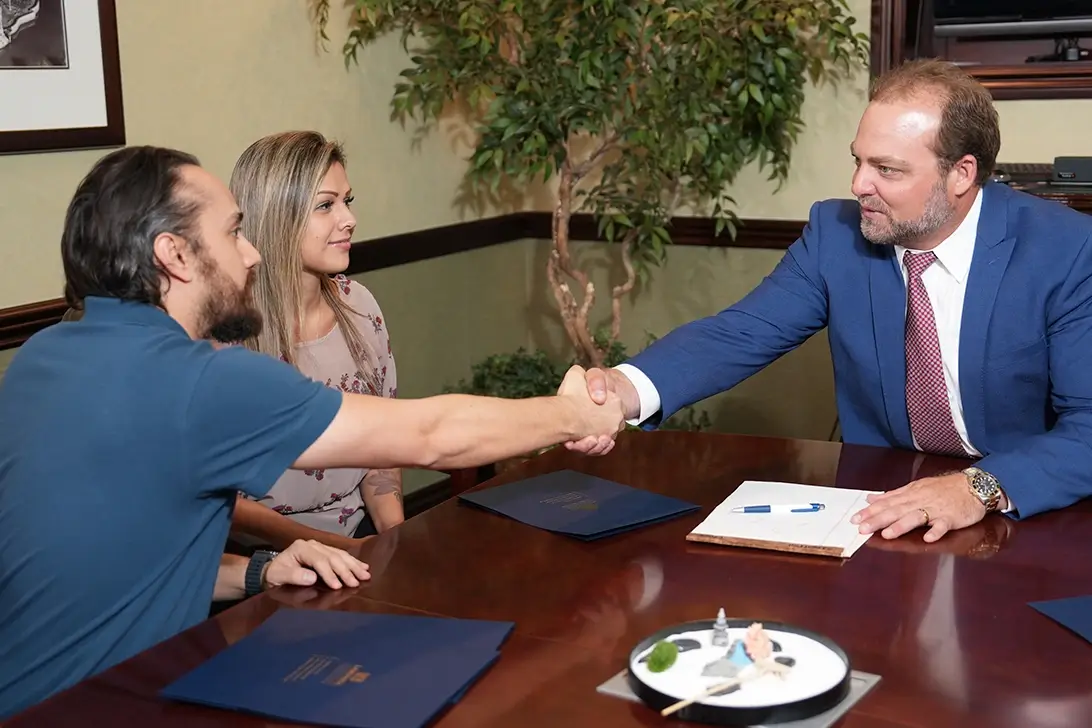
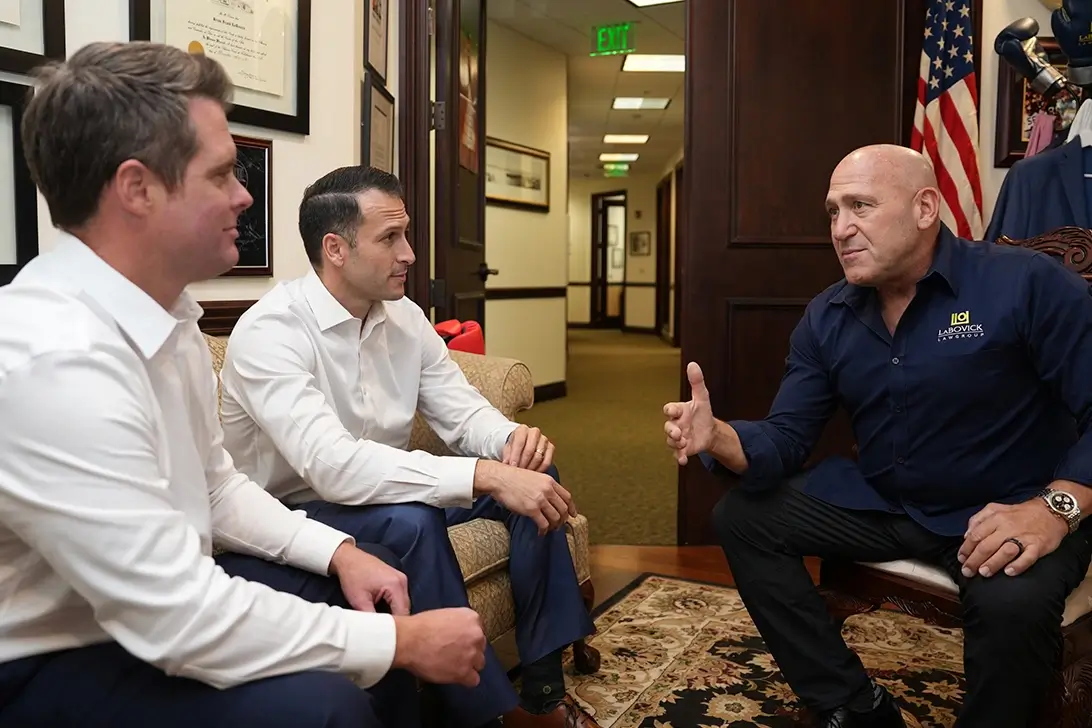
A LaBovick Law Group attorney consulting warmly with a family in a professional setting, conveying trust and personal attention. Alt text: “LaBovick Law Group nursing home abuse attorney meeting with Boca Raton family clients.”
Frequently Asked Questions from Boca Raton Families
How do I know if what I am seeing is actually abuse or neglect?
You do not have to be certain before you call us. Our job is to help you figure that out. If something looks or feels wrong, a free consultation costs you nothing and gives you real information about what your options are.
What if my parent is afraid to talk or cannot communicate?
Many nursing home residents cannot or will not speak up because they fear retaliation or are cognitively impaired. That does not mean a case cannot be built. Medical records, staffing logs, incident reports, witness accounts from other residents and visitors, and physical evidence all tell a story. Our attorneys know how to read that evidence.
Can I move my loved one to a different facility while a case is pending?
Yes. Your first priority should always be your loved one’s safety. Moving them to a safer facility does not harm your legal case. Our team can advise you on the best way to document the transition.
What if the nursing home asks me to sign something?
Do not sign any releases, arbitration agreements, or settlement offers from a nursing home or its insurance company without speaking with an attorney first. Many of these documents are designed to limit or eliminate your family’s rights.
Does it cost anything to talk to a lawyer?
No. Your initial consultation with our Boca Raton nursing home abuse lawyers is completely free. And because we work on a contingency basis, you pay nothing unless and until we recover compensation for your family.
You Should Not Have to Figure This Out Alone
You placed your parent in that facility because you wanted them safe and well cared for. The law agrees that they deserve exactly that. When a facility fails them, there are consequences, legal, financial, and public ones. Our job is to make sure those consequences land on the facility, not on your family.
LaBovick Law Group has offices across South Florida, including Boca Raton, and we are ready to stand with you today.